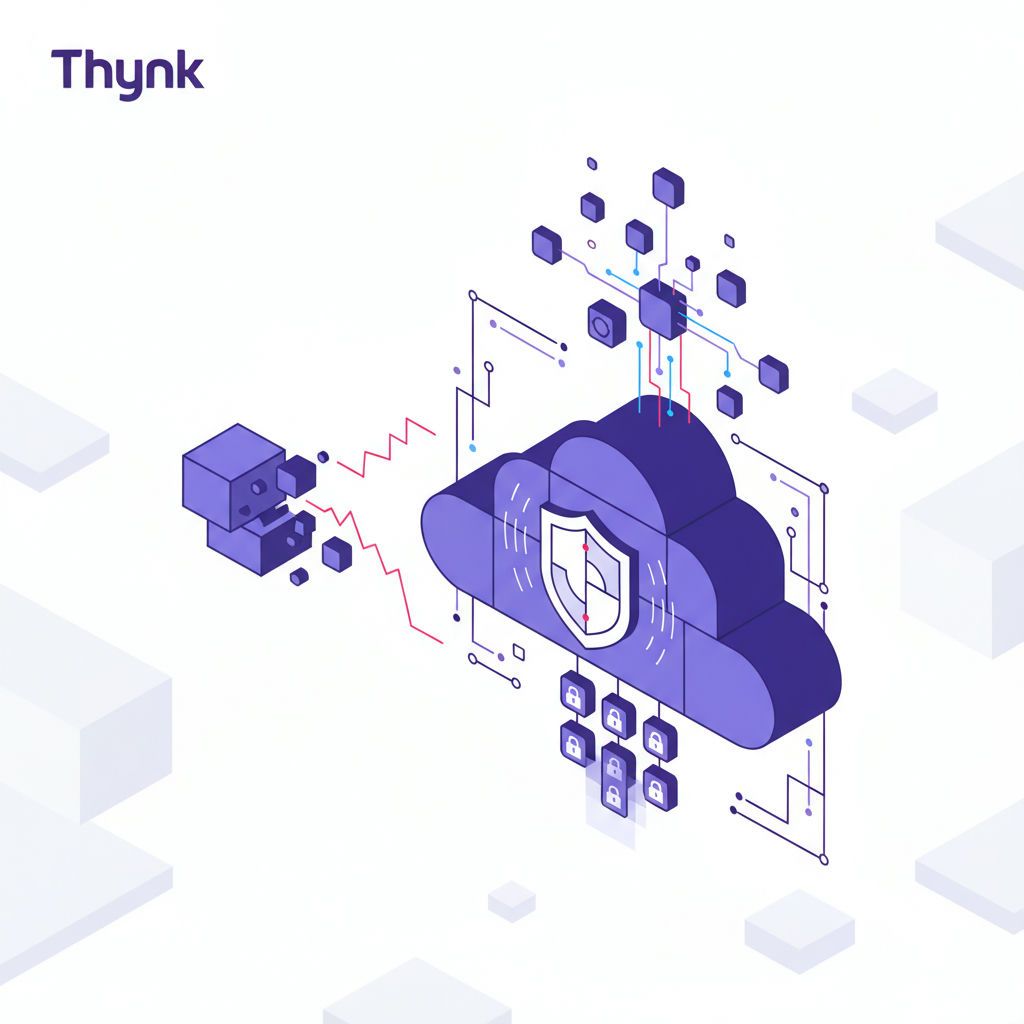
Hotel Software Security: Cloud-Native Platforms Protect Guest Data Through Enterprise Architecture
Modern hotel operations require cloud-native security that scales across multi-property portfolios without the operational burden of server maintenance. Enterprise hospitality platforms built on frameworks like Salesforce deliver automated threat detection, continuous compliance monitoring, and role-based access controls that legacy systems cannot replicate. Security now touches every group booking workflow, every MICE inquiry, every guest interaction—making it a revenue protection mechanism, not just an IT concern.
Leading operators shifting from reactive patching to proactive cloud infrastructure reduce ransomware risk by 73% while maintaining operational continuity during cyberattacks.
Why Cloud-Native Hotel Software Architecture Eliminates Security Debt
Hospitality operators moving from on-premises servers to Salesforce-native architectures eliminate the compliance, maintenance, and security burden of self-hosted infrastructure. Cloud providers deliver continuous monitoring, automated updates, and threat intelligence that legacy hotel systems cannot match.
Modern hotel software security rests on:
- IP restrictions and geo-verification prevent unauthorized access from suspicious locations, protecting group booking pipelines and venue CRM data
- Real-time monitoring tracks every user and device, shutting down threats before they compromise revenue operations
- Phishing simulations help sales teams and front-desk staff spot social engineering attempts targeting RFP workflows
- Passkey authentication replaces reused passwords across property management, CRM, and group sales software
Two-factor authentication and device verification shift from inconvenience to operational safeguard when leadership frames security as revenue protection—not compliance theatre. Hotel CRM systems built on Salesforce inherit the Einstein Trust Layer, ensuring governed AI and data isolation across properties.
Security becomes culture when operators understand that guest data protection directly impacts account expansion, sales velocity, and group conversion rates through the three pillars: Salesforce performance, clean data, and sales automation.
How to Test Operational Resilience Before a Cybersecurity Incident
Every hotel operator evaluating hospitality software should answer three questions before a ransomware attack occurs:
How do you check guests in if systems go offline? Paper backup procedures and manual key issuance protocols must exist. Who do you call when access is locked? Incident response contacts, vendor escalation paths, and legal counsel must be documented. Which reports do you need for manual operations? Daily revenue summaries, group booking rooming lists, and payment reconciliation backups must be accessible offline.
If answers are unclear, test readiness through tabletop shutdown scenarios. Cybersecurity roleplay exercises expose blind spots in business continuity plans, build team confidence during high-pressure incidents, and validate recovery procedures before revenue operations halt. Group booking software that lacks documented disaster recovery protocols puts MICE revenue at risk.
Modern hotel software must support business continuity through automated backups, multi-region redundancy, and guided recovery workflows.
Cloud vs On-Premises Hotel Software: The Security Debate Is Settled
Hosting hotel systems on-premises means shouldering full operational and compliance responsibility for server maintenance, hardware refresh cycles, compliance certifications (GDPR, PCI DSS, SOC 2), security patching, backup infrastructure, and ransomware protection.
Cloud providers like Microsoft Azure (Thynk's infrastructure partner) deliver world-class security baked into the platform: 24/7 monitoring, automated compliance reporting, threat intelligence integration, and global redundancy. Hotel software built on Salesforce inherits enterprise-grade security through the Einstein Trust Layer, ensuring governed AI, role-based permissions, and data isolation across properties.
The operational cost of maintaining on-premises hotel software—including HVAC, power redundancy, physical security, and IT staffing—exceeds cloud subscription costs while delivering inferior security outcomes. Cloud-native hospitality platforms shift capital expenditure to predictable operating expense while reducing ransomware risk and improving uptime guarantees.
Extended-stay operators and luxury chains migrating to cloud-native architectures eliminate security debt while enabling the sales automation and clean data foundations that accelerate group conversion rates.
How Salesforce-Native Hotel Software Elevates Security Posture
Thynk's Salesforce-native architecture embeds security at every layer of the hospitality capability stack—Channels, Sales/CRM, Group/MICE, Operations/Finance/Analytics, and AI/Agents:
- Continuous infrastructure monitoring with 24/7 surveillance, advanced threat detection, and automated incident response
- Data privacy compliance certification (GDPR, PCI DSS) protects guest payment data, group booking contracts, and venue CRM records
- Role-based access management ensures sensitive MICE proposals, group sales pipelines, and revenue analytics reach only authorized users
- Regular penetration testing by independent security experts probes systems continuously, fixing vulnerabilities before exploitation impacts operations
Data encryption at rest and in transit, combined with quarterly security audits, shifts hotel operations from reactive patching to proactive defence. This architecture supports multi-property operations, B2B CRM for group bookings, Meeting & Events software, e-proposal workflows, e-BEO automation, room-block management, space management, and package management without compromising security posture.
Salesforce-native hotel software integrates seamlessly with Group CRS platforms and PMS partners (Opera, Mews, Stayntouch, Protel) while maintaining security boundaries through governed APIs and encrypted data exchange. Learn how hotel PMS integration security works.
Security-First Hospitality Operations Scale Revenue Without Compromise
Leading global hotel groups now implement biometric access, single sign-on (SSO), and unified identity management to reduce login fatigue while strengthening access controls. When executives treat cybersecurity as non-negotiable infrastructure—not an IT cost centre—the entire organization follows. Protecting guest data becomes an investment in trust, reputation, and business continuity.
Cyberattacks targeting hotels escalate annually. Phishing campaigns target sales teams during high-volume booking periods. Spoofing attacks mimic legitimate RFP inquiries to steal group booking data. Ransomware locks booking engines, CRM systems, and venue management platforms during peak season.
Hotel software security is no longer a back-office concern. It touches every group sales interaction, every MICE proposal workflow, every convention center booking. Security strength equals the weakest link—whether that's an unpatched PMS integration, a reused password across venue CRM accounts, or an employee clicking a spoofed inquiry.
Read how AI crawlers access hospitality data and why governed AI frameworks like Agentforce protect revenue operations while enabling sales automation across group booking workflows.
What Hotel Operators Should Demand from Modern Hospitality Software
Cloud-native hotel software built on Salesforce delivers security through architecture, not afterthought. Operators evaluating CRM, PMS, and group booking platforms should prioritize:
- Native Salesforce architecture that inherits Einstein Trust Layer and Agentforce governance for secure AI-powered sales automation
- GDPR and PCI DSS compliance certification protecting guest payment data and MICE contract confidentiality
- Role-based access controls supporting multi-property and B2B CRM workflows without exposing sensitive revenue data
- Continuous monitoring and automated threat detection preventing ransomware, phishing, and credential theft before revenue impact
- Regular penetration testing and independent security audits providing third-party validation that security claims match operational reality
Thynk's Salesforce-native platform positions security as foundational infrastructure—not optional add-on. Hotel groups managing group booking software, MICE operations, venue CRM, GSO workflows, and convention center sales depend on this architecture to protect guest data while automating sales workflows.
The modern hospitality tech stack must balance operational velocity with zero-compromise security—achievable only through cloud-native design, governed AI frameworks, and continuous compliance monitoring. Hotel software that accelerates group conversion rates, expands account value, and improves sales velocity cannot sacrifice security posture to achieve those outcomes.
Hospitality operators evaluating platforms should ask: Does your hotel software inherit enterprise-grade security, or does it bolt-on compliance as an afterthought? The answer determines whether your group booking pipeline, venue CRM data, and MICE revenue operations remain protected during the next ransomware wave—while still enabling the Salesforce performance, clean data, and sales automation that drive revenue growth.
Explore Thynk's Salesforce-native hospitality platform and discover how cloud-native architecture protects revenue operations while accelerating group sales velocity through the complete capability stack.